





I provide personalized nutrition care for women who have diagnosed or unexplained metabolic conditions, gut health concerns, infertility, or symptoms of malnutrition. I also provide nutrition care for pregnancy and postpartum recovery. My approach combines medical nutrition therapy, individualized nutrition assessment, targeted nutrition labs, and functional GI and hormone assessment to create evidence-based plans tailored to each woman’s unique needs and goals.
Kaitlin Braswell, MS, RDN

Hi, I’m Kaitlin!
I’m a Registered Dietitian Nutritionist (RDN) passionate about helping women feel empowered and supported in their health at every stage of life. I provide personalized nutrition care for women navigating metabolic disease, GI concerns, immune health, reproductive health, pregnancy, and postpartum recovery.
My approach combines medical nutrition therapy, individualized nutrition assessment, targeted nutrition labs, and functional GI and hormone assessment to create evidence-based nutrition plans tailored to each woman’s unique needs and goals.
As a mother myself, I understand how much our nutritional needs, hormones, and health can change throughout different seasons of life. My goal is to look beyond a diagnosis or symptom and consider the whole person—creating practical, individualized nutrition strategies that support both immediate health concerns and long-term wellness.
I’m honored to walk alongside you through every stage of your health journey.
Are you:
-
Type 1 Diabetes: An autoimmune condition in which the pancreas produces little or no insulin, requiring lifelong insulin therapy to regulate blood glucose.
Type 2 Diabetes: A condition in which the body becomes resistant to insulin or does not produce enough insulin, resulting in elevated blood glucose levels.
Gestational Diabetes: Diabetes that develops during pregnancy and can affect both maternal and fetal health, with nutrition playing an important role in blood glucose management.
Prediabetes: A condition in which blood glucose levels are higher than normal but not yet high enough to meet the criteria for type 2 diabetes.
Metabolic Syndrome: A group of metabolic risk factors—including elevated blood sugar, high blood pressure, excess abdominal fat, and abnormal cholesterol or triglycerides—that increase the risk of cardiovascular disease and type 2 diabetes.
Obesity: A chronic, complex condition involving excess adiposity that can affect metabolism and increase the risk of numerous health conditions.
Insulin Resistance: A condition in which the body's cells respond less effectively to insulin, making it more difficult to regulate blood glucose.
Polycystic Ovary Syndrome (PCOS): A hormonal and metabolic condition commonly associated with insulin resistance, irregular menstrual cycles, and elevated androgen levels.
Non-Alcoholic Fatty Liver Disease (NAFLD): A condition involving excess fat accumulation in the liver that is not primarily caused by alcohol and is often associated with metabolic health.
Dyslipidemia: Abnormal levels of blood lipids, including elevated LDL cholesterol or triglycerides and/or low HDL cholesterol, which can increase cardiovascular risk.
Hyperlipidemia: Elevated levels of cholesterol and/or triglycerides in the blood that may benefit from individualized nutrition therapy.
Hyperglycemia: Blood glucose levels that are higher than the normal range and may occur with diabetes or other metabolic conditions.
Hypoglycemia: Blood glucose levels that fall below the normal range, which may occur in people with diabetes or as a result of certain medications or other conditions.
Metabolic Dysfunction–Associated Steatotic Liver Disease (MASLD): A condition involving excess fat accumulation in the liver associated with metabolic risk factors such as insulin resistance, overweight or obesity, and dyslipidemia.
-
Irritable Bowel Syndrome (IBS): A common disorder causing abdominal pain, bloating, gas, diarrhea, or constipation.
GERD (Acid Reflux): Stomach acid frequently flows back into the tube connecting your mouth and stomach (esophagus), causing heartburn.
Constipation and Diarrhea: Infrequent, difficult bowel movements or loose, watery stools.
Inflammatory Bowel Disease (IBD): Includes chronic conditions like Crohn’s disease and ulcerative colitis that cause long-lasting inflammation and ulcers.
Peptic Ulcers: Sores that develop on the lining of the stomach or the upper part of the small intestine.
Diverticulitis: Small pouches in the wall of the colon (diverticulosis) become infected or inflamed.
Celiac Disease: An autoimmune reaction where eating gluten (found in wheat, barley, and rye) damages the small intestine.
Lactose Intolerance: The inability to properly digest lactose, the sugar found in milk, due to a shortage of the enzyme lactase
-
Weak immune system: Low nutrient intake makes it hard for your body to fight germs, leading to frequent and severe infections. Wounds also take much longer to heal.
Muscle loss and weakness: The body breaks down its own muscle tissue for energy, causing severe physical weakness, fatigue, and low stamina.
Bone damage: Lacking key minerals like calcium and vitamin D can weaken bones over time, leading to conditions like osteopenia and osteoporosis.
Heart and blood pressure problems: A shortage of nutrients can cause a low heart rate (bradycardia), low blood pressure (hypotension), and electrolyte imbalances that risk dangerous heart rhythms.
Digestive trouble: Chronic poor nutrition can cause delayed stomach emptying (gastroparesis), diarrhea, and gut damage that blocks further nutrient absorption.
Skin, hair, and nail changes: Skin can become dry and inelastic, hair may turn brittle or fall out, and nails can crack or grow slowly.
Brain fog and cognitive decline: Starving the brain of proper fuel leads to poor concentration, memory loss, and a decline in overall mental sharpness.
Mood changes: Malnutrition frequently triggers depression, apathy, irritability, or severe fatigue.
Stunted growth: In infants, children, and teens, lack of proper nutrition can cause delayed development, failure to thrive, and permanent short stature.
Iron Deficiency: Causes anemia, leading to chronic exhaustion, pale skin, cold hands and feet, and shortness of breath.
Vitamin D and Calcium Deficiency: Triggers osteoporosis, making the bones highly brittle and prone to breaking from minor impacts.
Vitamin B12 Deficiency: Causes nerve damage (peripheral neuropathy), resulting in numbness or tingling in the hands and feet, balance issues, and confusion.
Vitamin A Deficiency: Leads to dry eyes, night blindness, and an increased vulnerability to severe respiratory infections.
Vitamin C Deficiency: Causes scurvy, characterized by bleeding gums, severe bruising, joint pain, and old wounds reopening.
-
Nutrition needs change dramatically throughout the reproductive years. I provide individualized nutrition support for women preparing for pregnancy, navigating pregnancy, recovering postpartum, and breastfeeding—helping you meet your changing nutrient needs while supporting your health and your growing family.
Preconception Nutrition: Personalized nutrition support to prepare the body for pregnancy, optimize nutrient status, support reproductive health, and establish nourishing habits before conception.
Fertility & Reproductive Health: Nutrition support for women navigating fertility concerns, including nutrition considerations related to ovulation, insulin resistance, PCOS, and overall reproductive health.
Pregnancy Nutrition: Individualized nutrition support throughout pregnancy to meet changing nutrient needs, support healthy fetal development, and promote maternal health.
Gestational Diabetes: Nutrition therapy to help manage blood glucose levels during pregnancy while meeting the increased nutrient and energy needs of both mother and baby.
Pregnancy-Related Nausea & Food Aversions: Practical nutrition strategies to support adequate hydration, energy, protein, and nutrient intake when nausea, vomiting, or food aversions make eating difficult.
Healthy Pregnancy Weight Gain: Personalized guidance to support appropriate weight gain throughout pregnancy based on individual needs and stage of pregnancy.
Postpartum Nutrition & Recovery: Nutrition support to replenish nutrient stores, support tissue healing and recovery, restore energy, and meet the changing nutritional demands of new motherhood.
Postpartum Mental Well-Being: Nutrition support focused on adequate energy intake and key nutrients involved in brain health and nervous system function. Nutrition can be one supportive component of a comprehensive approach to postpartum mood and mental well-being, alongside appropriate medical and mental health care when needed.
Breastfeeding & Lactation Nutrition: Guidance on meeting increased nutrient and fluid needs while breastfeeding and supporting adequate energy and nutrient intake during lactation.
Postpartum Weight Management: Individualized nutrition support for women who want to gradually and sustainably work toward their health and body-composition goals after pregnancy, with consideration for recovery and lactation needs.
Postpartum Anemia & Nutrient Repletion: Nutrition strategies to support adequate iron and other nutrients involved in healthy red blood cell production and replenishing nutrient stores after pregnancy and childbirth.
Infant & Complementary Feeding: Nutrition guidance for transitioning infants to solid foods and establishing a nutrient-rich foundation during early childhood.
-
Menstrual Cycle Health: Nutrition support throughout the menstrual cycle to help meet changing energy and nutrient needs and support regular, healthy cycles.
Irregular Menstrual Cycles: Nutrition support for women experiencing cycles that are unusually long, short, irregular, or unpredictable.
Amenorrhea: Nutrition support for women experiencing the absence of menstrual periods, including consideration of adequate energy availability and nutrient intake.
PMS & PMDD: Nutrition strategies to support women experiencing physical, emotional, and behavioral symptoms associated with the menstrual cycle.
PCOS & Hormonal Health: Nutrition support for PCOS, with a focus on insulin sensitivity, metabolic health, menstrual regularity, and overall reproductive health.
Perimenopause: Nutrition support during the transition toward menopause, addressing changing nutrient needs, body-composition changes, metabolic health, and common symptoms.
Menopause: Nutrition strategies to support metabolic, cardiovascular, bone, and overall health as estrogen levels change following menopause.
Postmenopause: Personalized nutrition to support long-term bone, heart, metabolic, and muscle health after menopause.
Low Energy Availability: Nutrition support when inadequate energy intake relative to activity demands may affect menstrual function, bone health, recovery, and overall health.
Female Athlete & Active Women’s Health: Nutrition support for women whose training, energy intake, menstrual cycle, and recovery needs may interact with hormonal and metabolic health.
Blood Sugar & Hormonal Health: Nutrition strategies to support stable blood glucose and insulin sensitivity, particularly when metabolic health and reproductive hormones intersect.
Healthy Weight & Hormonal Health: Individualized nutrition support for body-composition goals while prioritizing adequate nourishment, metabolic health, and reproductive function.
-
Not seeing what you’re looking for? Nutrition can play an important role in managing many health conditions, supporting recovery, and improving overall well-being. If you have a nutrition-related concern or a medical condition that isn’t listed above, I’d be happy to discuss whether individualized nutrition counseling may be appropriate for you.
Digestive & Gut Health: IBS, constipation, diarrhea, bloating, reflux, food intolerances, and other digestive concerns
Heart & Cardiovascular Health: High cholesterol, high blood pressure, heart disease, and nutrition for cardiovascular health
Kidney Health: Nutrition support for kidney disease, kidney stones, and related dietary needs
Gastrointestinal Conditions: Celiac disease, inflammatory bowel disease, diverticular disease, and other GI conditions
Food Allergies & Intolerances: Nutrition guidance to maintain adequate nutrition while navigating food allergies, sensitivities, or elimination diets
Autoimmune Conditions: Nutrition support to promote adequate nourishment and overall health alongside medical treatment
Disordered Eating & Nutrition Concerns: Non-diet, supportive nutrition counseling and collaboration with appropriate mental health professionals when needed
Nutrient Deficiencies: Nutrition strategies to address inadequate intake or identified deficiencies in collaboration with your healthcare team
Chronic Disease Management: Individualized Medical Nutrition Therapy for a variety of chronic health conditions
Healthy Aging: Nutrition support for maintaining muscle, bone health, metabolic health, and nutritional adequacy throughout adulthood
General Wellness: Personalized nutrition for improving eating habits, energy, meal planning, and overall nutritional well-being
Don't see your condition listed? That doesn't necessarily mean nutrition support isn't appropriate. Schedule a consultation to discuss your individual needs and determine whether we're a good fit.






What I Offer:
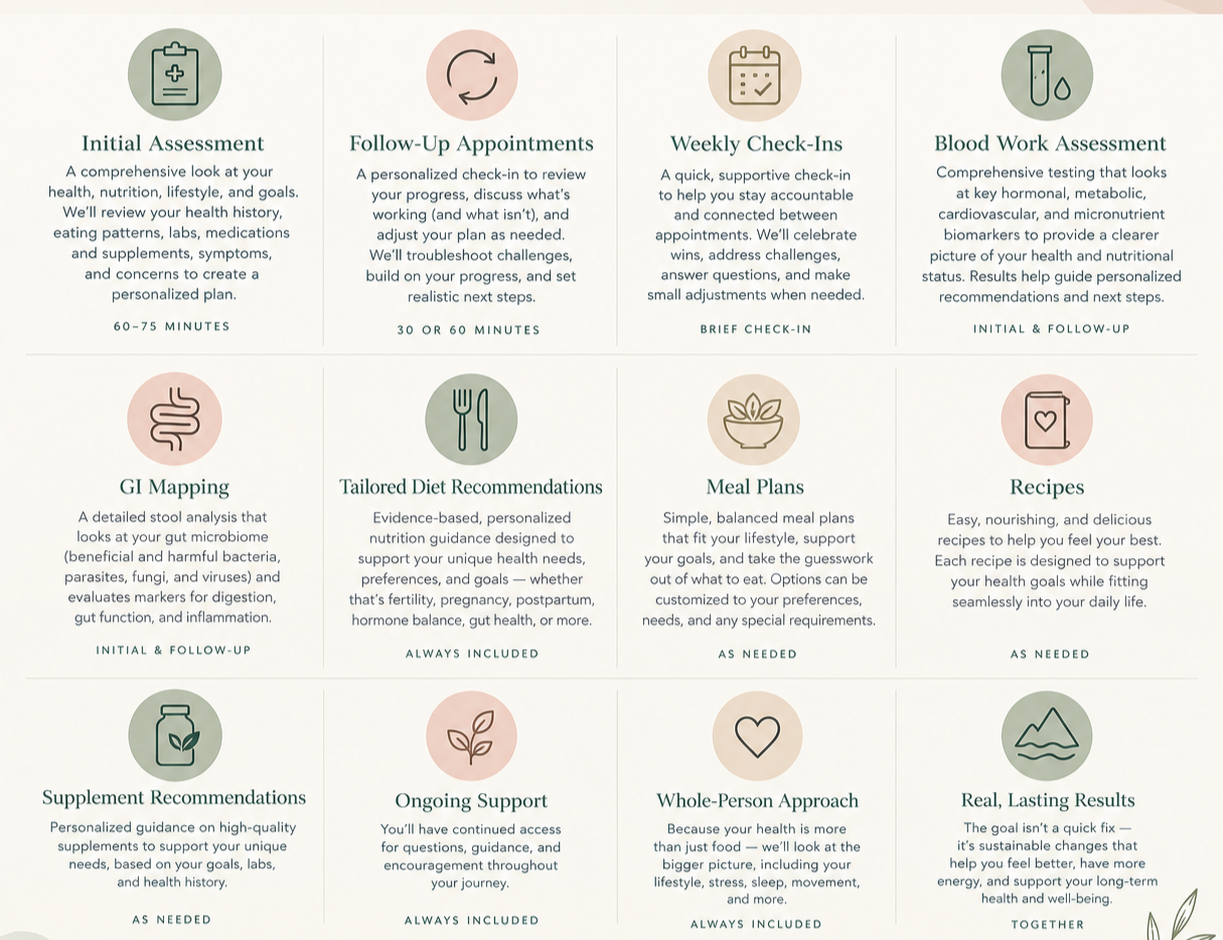
Investment Options
Pay With Insurance - Coming Soon
Basic Nutrition Therapy Package
Starting at $699
Personalized nutrition support without additional testing. This package provides the structure, education, and ongoing accountability you need to work toward your health goals.
Includes:
Initial Nutrition Assessment
3 Monthly Follow-Up Appointments—
$699
5 Monthly Follow-Up Appointments — $899
OR11 Monthly Follow-Up Appointments — $1,899 (BEST VALUE)
Your nutrition plan is personalized to your health history, goals, lifestyle, preferences, and individual needs.
Cash Pay
Complete Nutrition Therapy Package
Starting at $3,599
Our most comprehensive nutrition support package, combining GI Mapping, personalized laboratory testing, and ongoing nutrition therapy to give you a complete picture of your health and provide continued support throughout your journey.
Includes:
Initial Nutrition Assessment
GI Mapping Test Kit
Personalized Lab Orders
3 Rounds of GI Mapping & Lab Testing: initial, follow-up, and conclusion
GI Mapping & Lab Results Interpretation
Personalized Nutrition Protocol
5 Monthly Follow-Up Appointments — $3,899
OR11 Monthly Follow-Up Appointments — $4,599
This package is designed for clients who want comprehensive testing, personalized nutrition support, and ongoing guidance rather than a short-term approach.
GI Mapping Assessment Package
$1399
A comprehensive starting point for clients who want to take a closer look at their digestive health and create a personalized nutrition plan based on their individual needs.
Includes:
Initial Nutrition Assessment
GI Mapping Test Kit
GI Mapping Results Interpretation
Personalized Nutrition Protocol based on your results and goals
2 Monthly Follow-Up Appointments to review progress and adjust your plan
Add-on lab assessment $515
Best for: Clients looking for a deeper understanding of their gut health and personalized nutrition support based on their GI Mapping results.
Lab Assessment Package
$1599
A comprehensive nutrition-focused assessment using personalized laboratory testing to provide a deeper look at your health and nutritional status.
Includes:
Initial Nutrition Assessment
Personalized Lab Orders
Lab Results Interpretation
Personalized Nutrition Protocol based on your results and goals
2 Monthly Follow-Up Appointments to monitor progress and refine your plan
Add-on GI Map assessment $430
Best for: Clients who want to use laboratory data to better understand their nutritional and metabolic health and create a targeted nutrition plan.